

Department of English
Department Profile
The Department of English, established in 2009 at the inception of the institution, is dedicated to providing quality education in the English language at both undergraduate and postgraduate levels. The curriculum is carefully structured in alignment with the institution’s educational objectives, integrating cross-cutting themes that enhance students’ academic experience and support their professional and personal development. The department offers language development courses for undergraduate B.Tech students, along with advanced programmes such as M.A. and Ph.D. Emphasis is placed on developing proficiency in the four fundamental language skills—listening, speaking, reading, and writing—thereby equipping students with effective communication and critical thinking abilities.
The department is supported by a team of highly experienced faculty members with expertise in Literature, Language and Linguistics, and English Language Teaching (ELT). Recognized for their innovative teaching practices, research contributions, and committed mentorship, the faculty members play a vital role in fostering an engaging learning environment. In line with its inclusive educational approach, the department organizes various academic and co-curricular activities, including the Literary Fest and the English Literary Association, to promote participatory and experiential learning. Through these initiatives, the department strives to nurture intellectually capable and socially responsible individuals prepared to contribute meaningfully to society.
Vision
To be a leading center for English Studies that nurtures communication skills, critical thinking, cultural understanding, and practical competencies through literature and interdisciplinary research, empowering students to contribute meaningfully to society and to a sustainable future.
Mission
- M1: To strengthen communication skills, advance critical thinking, and develop analytical abilities through technology-driven pedagogy aligned with global academic and professional standards.
- M2: To enhance a dynamic research culture in literary, linguistic, cultural, and interdisciplinary studies addressing contemporary social and sustainability challenges.
- M3: To integrate emerging technologies, digital humanities, and experiential learning to promote innovative teaching and meaningful knowledge application.
- M4: To inculcate ethical values, leadership qualities, and essential soft skills, preparing learners for responsible participation in academic, professional, and social contexts.
HoD Profile

Dr. P. Revathi
HoD & Associate Professor
Dr. P. Revathi is an accomplished academician with 18 years of experience in teaching and academic administration, currently serving as the Head of the Department of English. In her role as Head, she provides academic leadership by overseeing the effective functioning of the department, guiding faculty members, and fostering a collaborative and research-oriented environment. As an active researcher and mentor, she has published around 55 research articles in Scopus-indexed, peer-reviewed, and UGC CARE-listed journals. She has also presented papers at national and international conferences and seminars, contributed book chapters, and co-authored seven books. As a recognized Research Supervisor, she guides postgraduate and doctoral scholars, encouraging quality research and academic excellence. Currently, she is supervising six Ph.D. scholars.
Academic Goals of the Department
- To develop advanced proficiency in the four fundamental language skills—listening, speaking, reading, and writing—among students to enable effective academic, professional, and global communication.
- To cultivate critical thinking and analytical abilities through the study of literature, language, and linguistics, enabling students to interpret texts, ideas, and cultural contexts with scholarly insight.
- To promote research-oriented learning by encouraging postgraduate and doctoral scholars to engage in innovative and interdisciplinary research in areas such as Literature, Linguistics, and English Language Teaching (ELT).
- To equip undergraduate engineering students with strong communicative competence and professional language skills required for academic success, employability, and workplace effectiveness.
- To foster an intellectually stimulating academic environment through seminars, workshops, literary activities, and scholarly collaborations that support creativity, ethical research practices, and lifelong learning.
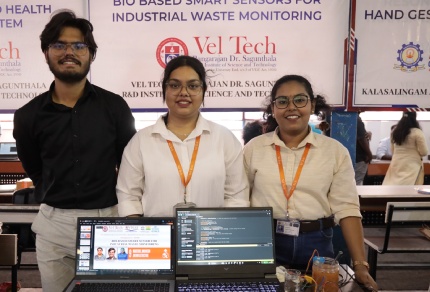
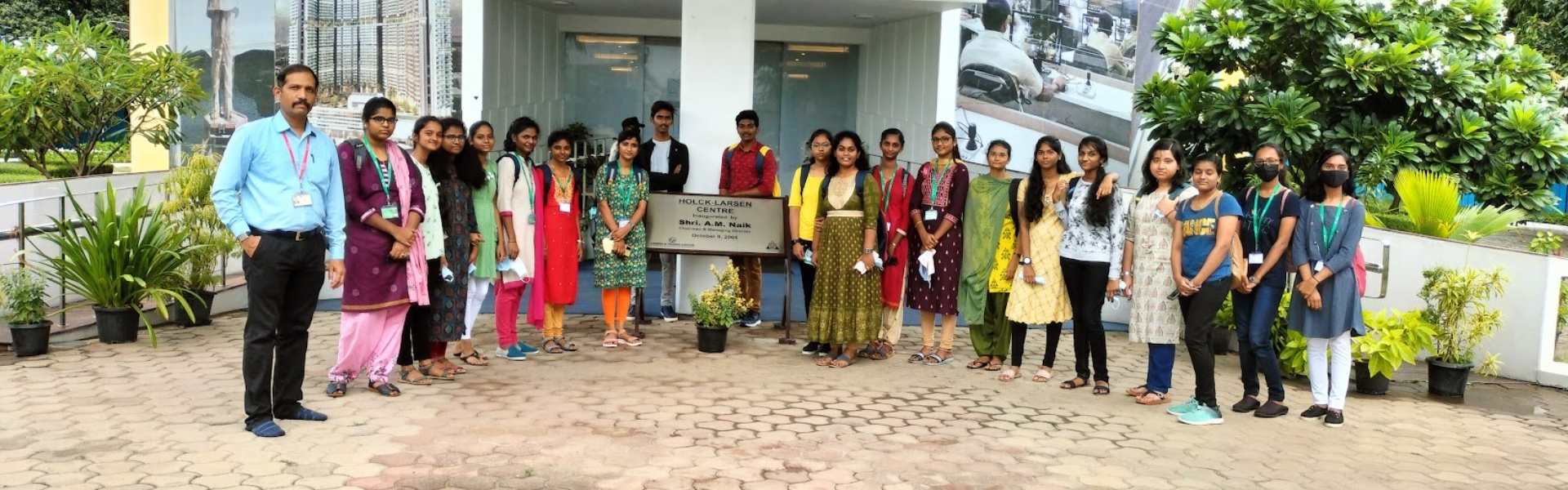
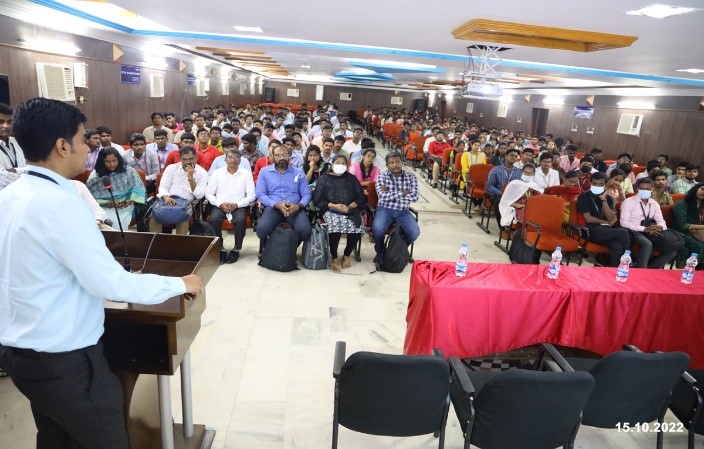
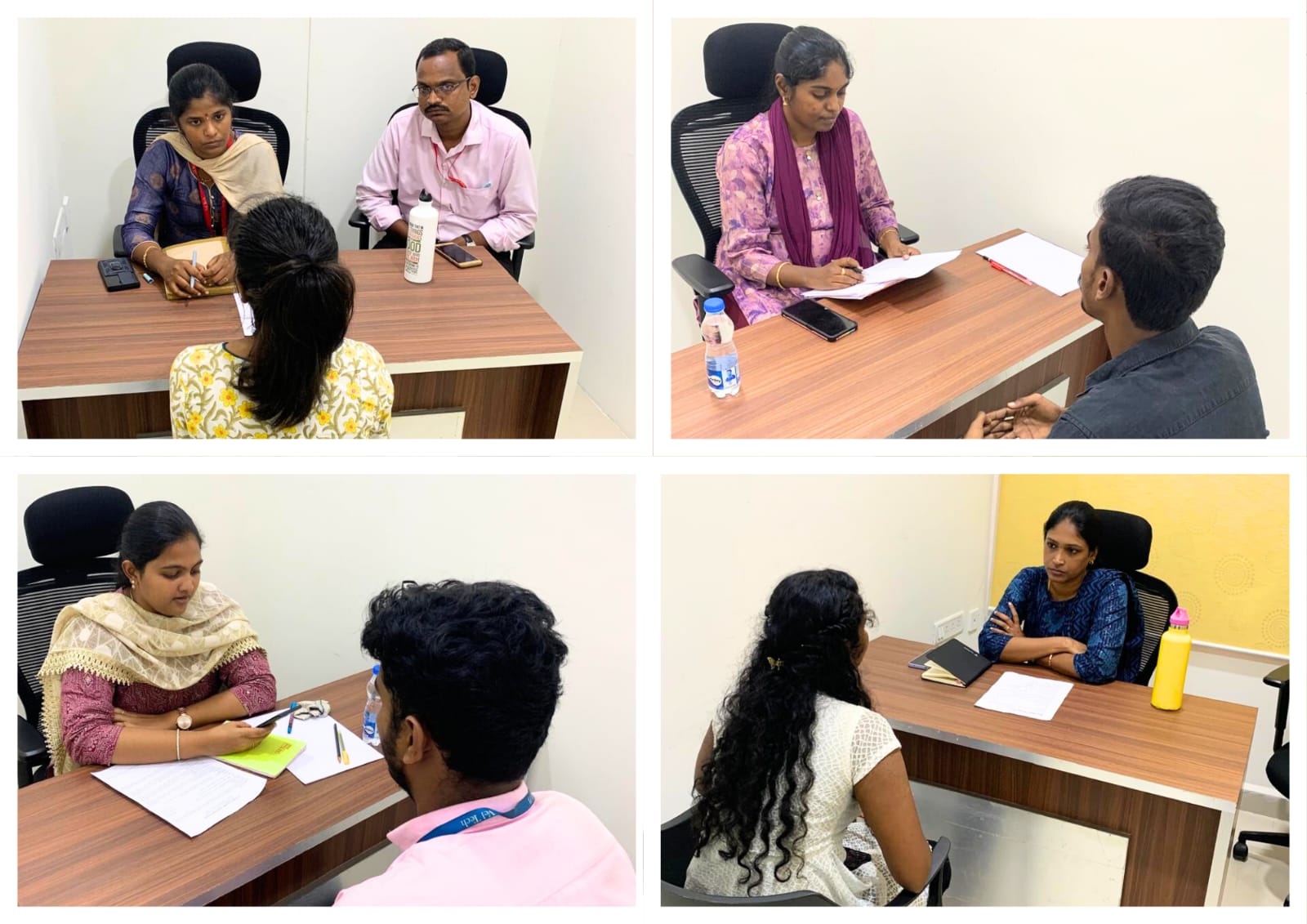
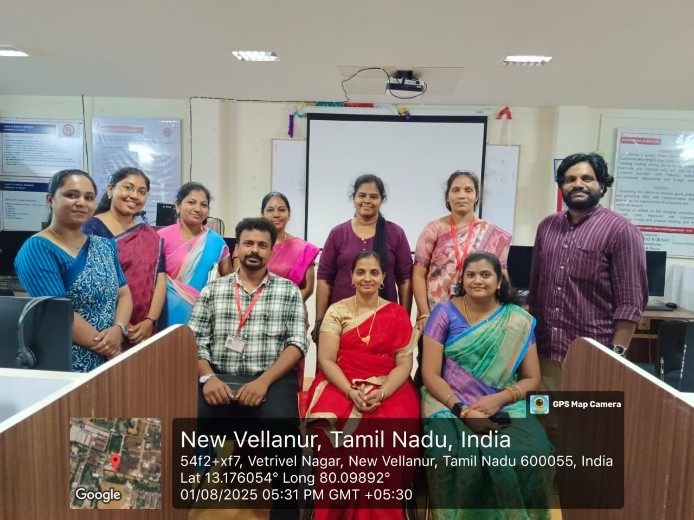
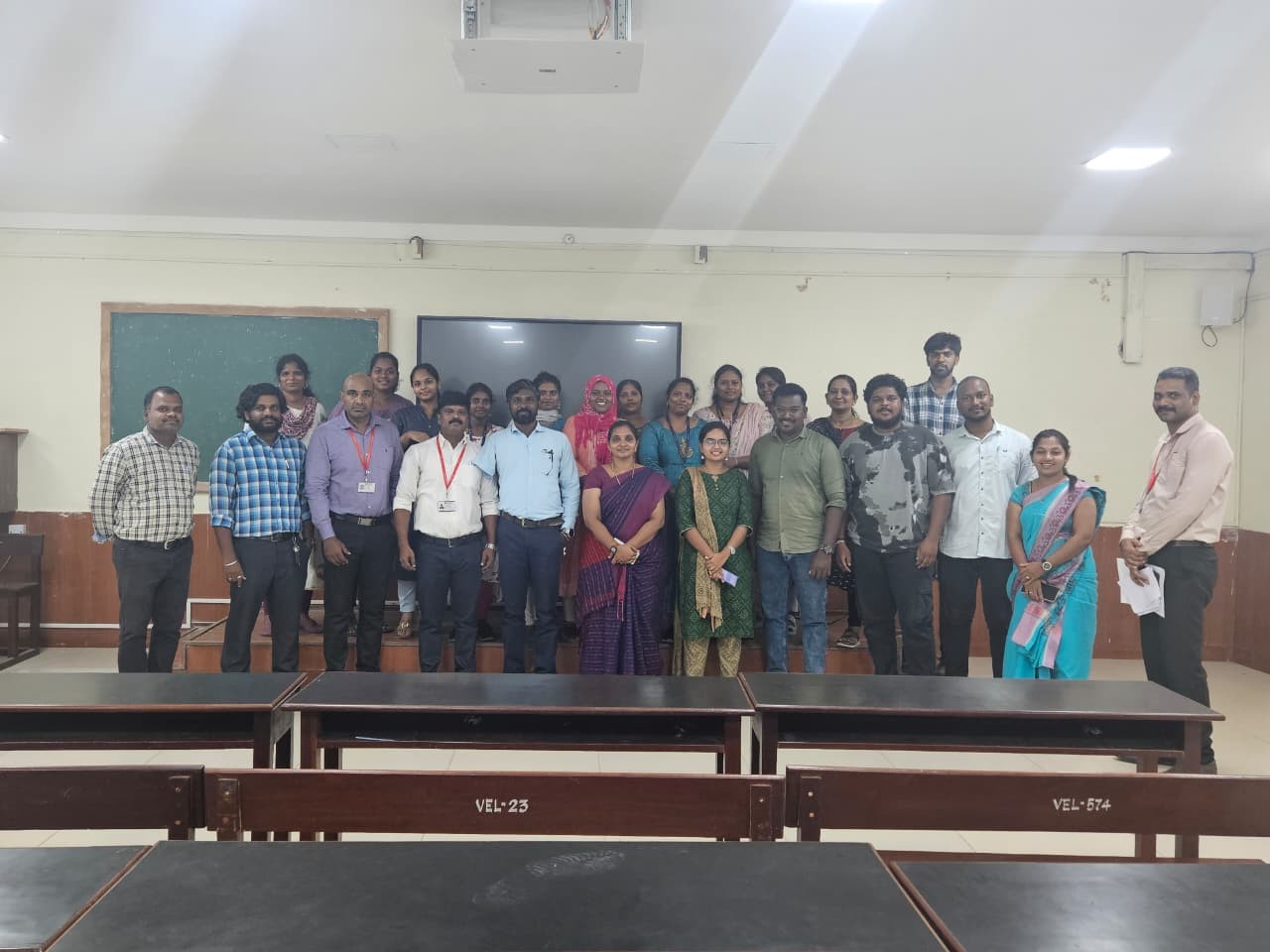
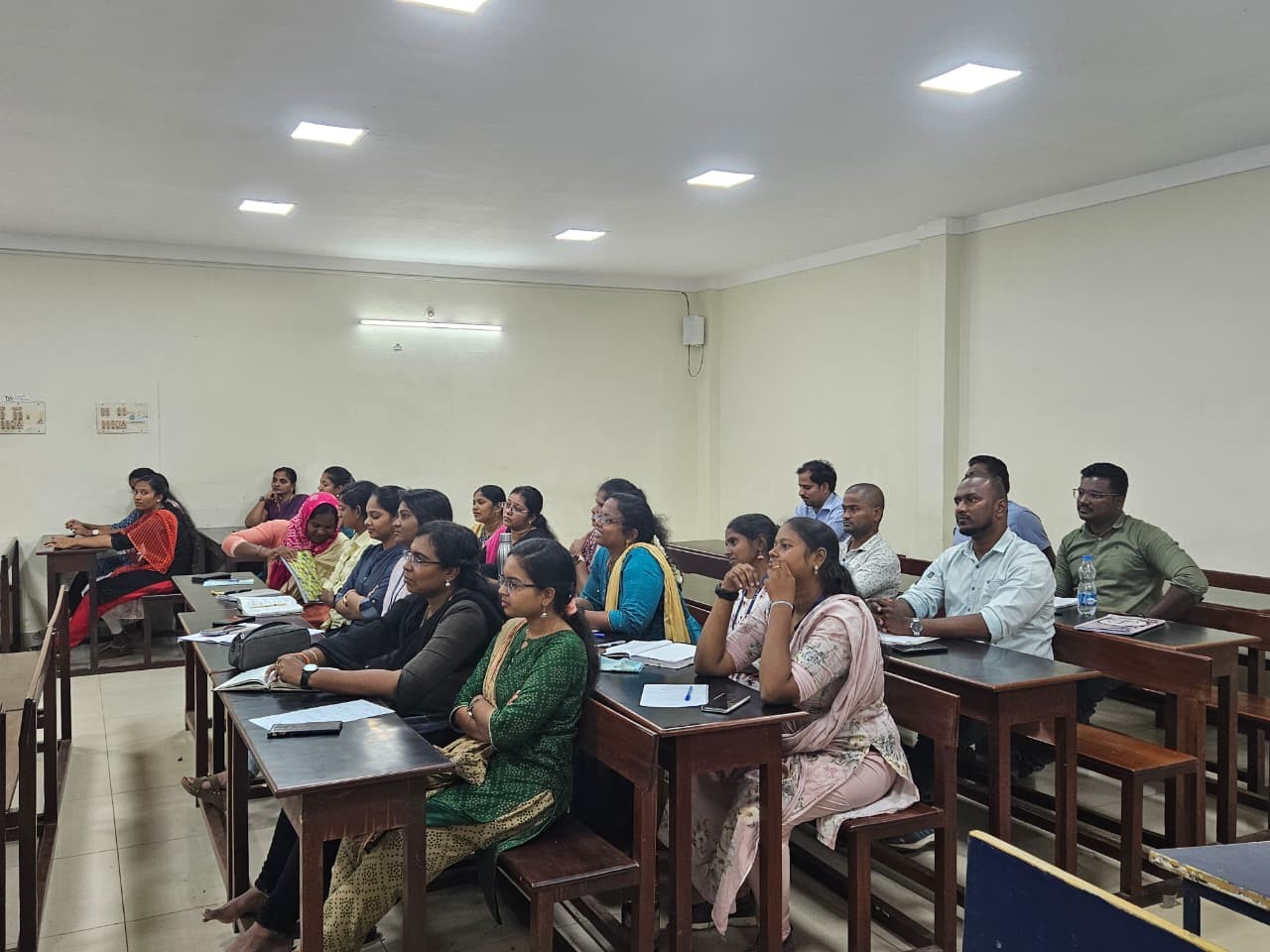
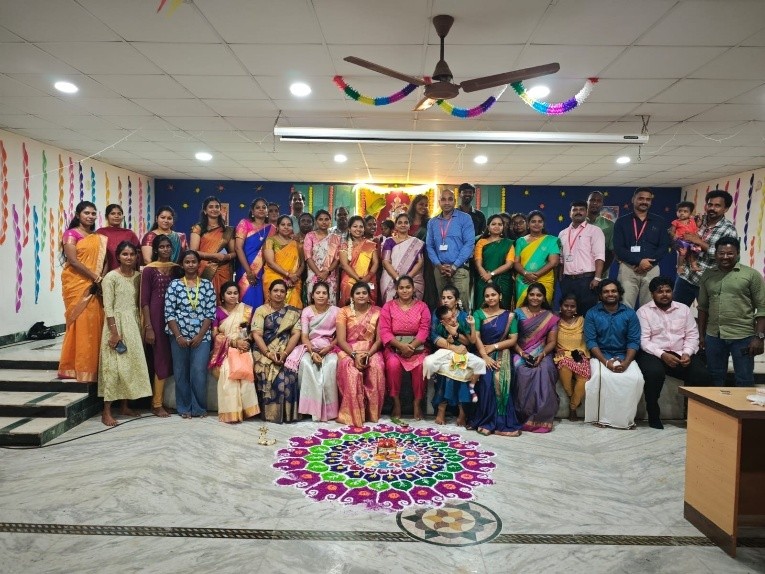
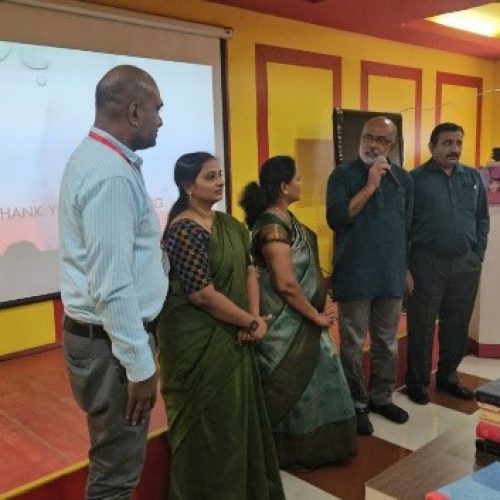
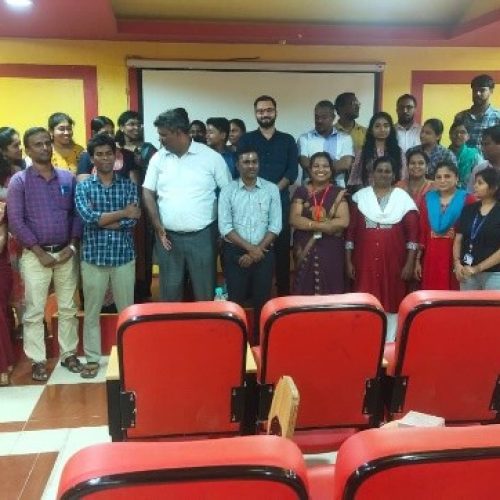
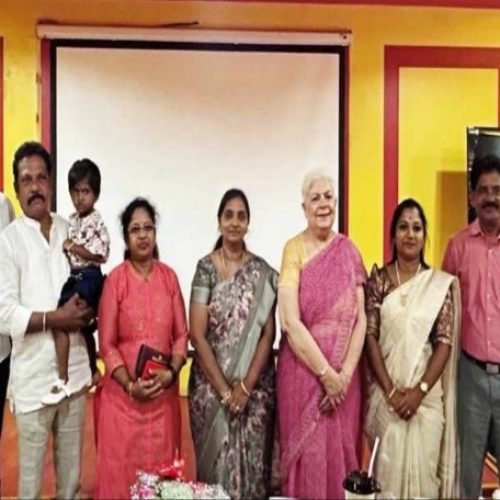
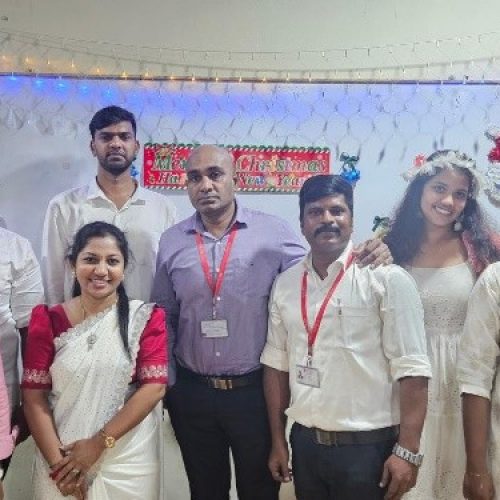
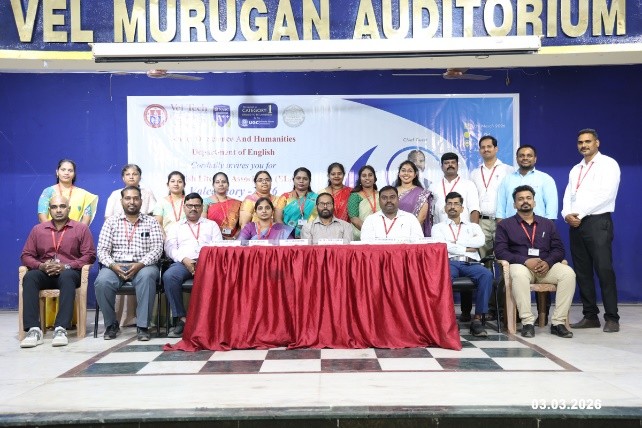
Glimpses of Department Events
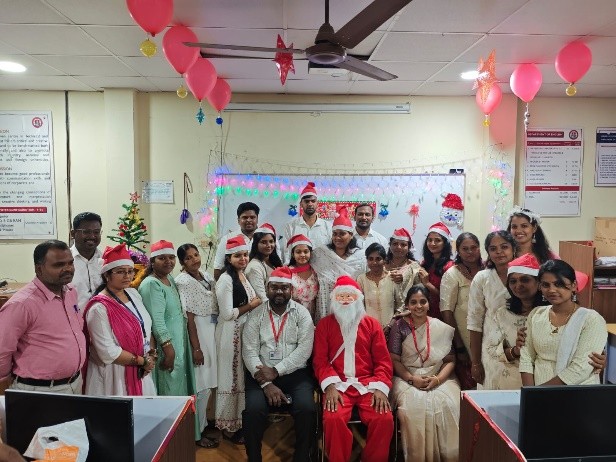
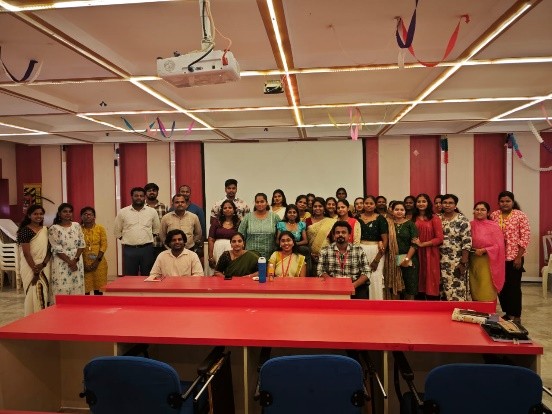
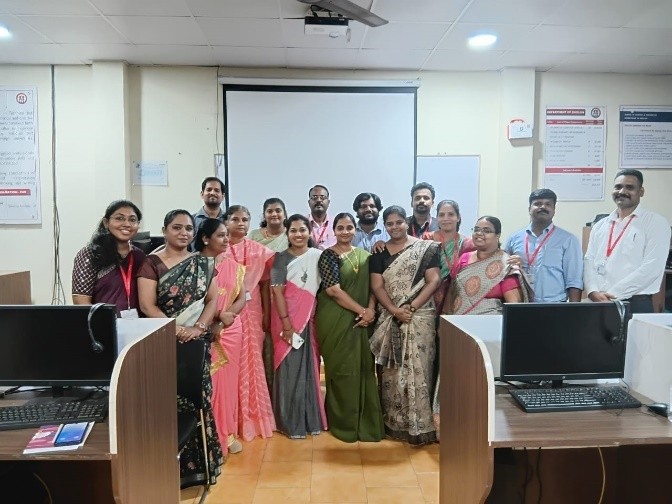
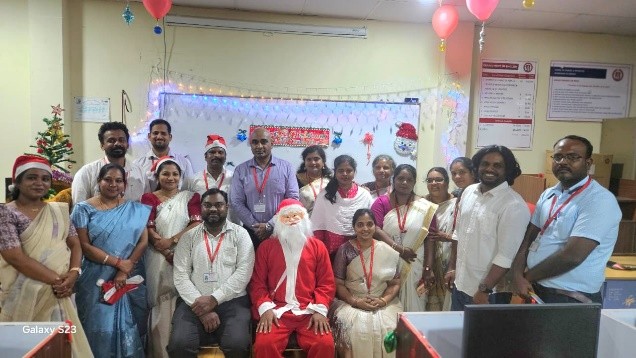
Programmes Offered
UG Programme
B. Tech Courses Offered (Common to all Branches)
- Foundation Courses – Offered to First-Year B. Tech students to develop fundamental English language and communication skills.
- Open Electives – Offered to Second, Third, and Fourth-Year B. Tech students focusing on advanced language, communication, and interdisciplinary learning.
| S. No | Courses | Course Category | Academic Regulations | Downloads (Curriculum and Syllabi) |
| 1 | English for Global Careers I | Foundation Courses | B. Tech Regulations VTR UGE 2025 | CLICK HERE |
| 2 | English for Global Careers II | Foundation Courses | B. Tech Regulations VTR UGE 2025 | CLICK HERE |
| 3 | Professional Communication I | Foundation Courses | B. Tech Regulations VTR UGE2021 | CLICK HERE |
| 4 | Professional Communication II | Foundation Courses | B. Tech Regulations VTR UGE2021 | CLICK HERE |
| 5 | Academic Writing | Open Elective | B. Tech Regulations VTR UGE2021 | CLICK HERE |
| 6 | Effective Group Discussion | Open Elective | B. Tech Regulations VTR UGE2021 | CLICK HERE |
| 7 | Science Narratives | Open Elective | B. Tech Regulations VTR UGE2021 | CLICK HERE |
| 8 | Shakespeare for Life | Open Elective | B. Tech Regulations VTR UGE2021 | CLICK HERE |
PG Programme
M.A. English Programme
The M.A. English programme is designed to provide advanced knowledge in literature, language, and critical theory while fostering analytical, research, and communication skills among students. The curriculum offers a comprehensive study of major literary traditions and genres, including Poetry, Drama, Postcolonial Literature, British Prose and Fiction, Shakespeare Studies, Indian Writing in English, American Literature, Canadian Studies, and Australian Literature, along with foundational insights into English Language Teaching and Linguistics.
To enhance academic specialization, students can choose programme electives such as Film Studies, Copy Editing, Dalit Studies, Children’s Literature, Research Writing, and E-Writing, enabling them to explore emerging areas of literary and professional studies. The programme also integrates open elective courses through SWAYAM/MOOC platforms, promoting digital and interdisciplinary learning.
A strong emphasis is placed on research and experiential learning through internships, minor projects, and a two-phase major research project, allowing students to develop scholarly inquiry and academic writing skills. Additionally, life skills courses such as Business Communication, Interview Skills and Technical Writing support professional development. The programme comprises 80 credits in total and is structured to prepare students for careers in academia, research publishing, media, and other language-related professions.
Eligibility for M.A. English
The eligibility criteria for admission into PG programmes are as per the norms of Commission, Academic Council and Executive Council Meeting framed from time to time.- Candidates seeking admission to the M.A. English programme must have completed a Bachelor’s degree in English or a related discipline from a recognized university.
- Applicants should have secured a minimum of 50% marks in their undergraduate degree.
- Preference is generally given to candidates with a A. in English Literature or English Language.
| S. No | PG Programme | Course Category | Academic Regulations | Downloads (Curriculum and Syllabi) |
| 1 | M.A. English | Programme Core, Programme Elective, Open Elective, Independent Learning, Life Skills, Extension Activities | PGAS-2023 | CLICK HERE |
| PMAS-R19 | CLICK HERE |
Programme Educational Objectives
- Prepare students for successful practice in diverse fields of English Studies such as Public speaking and speech-writing, rhetoric, composition studies, creative writing, philology and etymology, journalism, poetry, publishing, literacy, area studies etc.
- Exercise English language skills and literature knowledge in the selected career in industries and organizations
- Instigate the students with professional conversation in English by connecting it to diverse eras and cultures. The motto is to provoke and support their intellectual curiosity in terms of valuing literature, language, and imagination.
- Refine the range of judging the aesthetic and ethical value of literary texts among students and prepare them to persuade the standards behind judgments.
- Pursue higher education, research, and progress in the English Language teaching and Literature realm.
Programme Outcomes
- Mastering the language and Linguistic Proficiency: Master the English language skills and varieties to apply unequivocally in the expressive frameworks through literature and criticism. Acquire essential linguistic proficiency to excel in different appropriate realistic situations.
- Acquire Language and Communicative Skills: Promote individuals’ language skills to meet corporate and professional needs. Facilitate the students to acquire communicative skills to meet global competitions and challenges.
- In-depth Knowledge, Evaluation and Appreciation: Equip the learners with an in- depth knowledge of a wide spectrum of genres and writers. Enable graduates to critically evaluate and appreciate literary work of different ages.
- Learning methods: Learn different methods of curriculum design and pedagogies of teaching.
- Understanding Approaches and Unbiased Criticism: Understand foremost trends, activities, and ‘-isms’ and diverse language approaches. Mould into complete literary reviewers with a worthy outlook towards unbiased criticism and impartial judgments.
- Higher Education and Research: Provide a good formal base for higher education, advanced degree, and quality research, ensuring substantial advancement of the language on the whole.
- Contribute to Growth: Contribute to the growth of the nation and society by applying the acquired knowledge in translation, interpretation skills etc.
Programme Specific Outcomes
Upon completion of M.A. English, students will be able to:- PSO 1: Identify literary texts pertaining to society, culture, ethnicity, and ecology.
- PSO 2: Read and analyze literary and cultural materials in a variety of genres using critical and theoretical techniques.
- PSO 3: Determine and expand the influence of literary concepts, ideals, and themes on society.
- PSO 4: Utilize research writing skills to complete a literature project that demonstrates core competency and nuance.
- PSO 5: Collect, assess, and synthesize data from a range of texts and theories related to language, literature, and teaching languages.
- PSO 6: Increase proficiency in language and linguistics and evaluate texts on English teaching techniques.
- PSO 7: Demonstrate the ability to use technology to adapt to shifting literature trends.
- PSO 8: Showcase English language and technological proficiency in the global context and acquire employability.
- PSO 9: Become ethically responsible individuals who contribute to the advancement of society.
Ph.D. Programme
Ph.D English
The Ph.D. Programme in English aims to promote advanced research and scholarly inquiry in diverse areas of literature, language, and interdisciplinary studies. The programme encourages researchers to engage in critical and innovative studies across various literary traditions such as British, American, Indian Writing in English, African, and Turkish literature, along with emerging fields like Dalit Literature, Diaspora Studies, Indian Drama, and Myth studies. In the area of language and linguistics, scholars are guided to explore domains such as English Language Teaching (ELT), English for Specific Purposes (ESP), Linguistics, and Computational Linguistics. The programme also supports interdisciplinary research in areas including Feminism, Psychoanalytical Studies, Film Studies, Translation Studies, Women and Food Studies, and Digital Humanities. Through rigorous research training, guidance from experienced supervisors, and engagement with contemporary theoretical perspectives, the programme aims to cultivate independent scholars capable of contributing meaningful knowledge to academia and society.National Admission Eligibility
The eligibility for admission into Ph.D. programmes is PG degree of the Institution or any other qualification recognized as equivalent thereto in the field of study as notified in the Table below.| Programme | Qualification for admission |
| Ph.D. Degree in Science and Humanities | M.A. (By Research) /M.Phil. in the relevant branch of Science and Humanities |
- The candidate should obtain minimum of 55% marks or CGPA of 6.0 on a 10-point scale in the qualifying examinations, or its equivalent grade ‘B’ in the UGC 7-point scale or an equivalent degree from a foreign educational Institution accredited by an Assessment and Accreditation Agency.
- A relaxation of 5% of marks, from 55% to 50%, or an equivalent relaxation of grade, may be allowed for those belonging to SC/ST/OBC (non-creamy layer) / Differently-Abled and other categories of candidates as per the decision of the Commission from time to time.
International Admission Eligibility
Minimum eligibility criteria for International Students are given below| Programme | Qualification for admission |
| Ph.D. Degree in Science and Humanities | M.A. (By Research) in the relevant branch of Science and Humanities or equivalence degree specified by AIU. |
- The programme on which the eligibility is to relied upon must be from an Institute included a list of the Association of Indian Universities (AIU), New Delhi – 110002
- Incase the University / Board is not included in the said list, the candidate has to obtain and submit an equivalence certificate to this effect from the Association of Indian Universities
Modes of Ph.D. Programme
The Ph.D. programme is offered in the following modes:- Full-Time Mode
- Part-Time Mode
Admission Process
- Admission through Entrance Examination + Interview/Viva-Voce.
- Weightage: Entrance Test (70%) + Interview (30%).
- Entrance Test Pattern: 50% Research Methodology + 50% Subject-specific questions.
- Minimum qualifying mark: 50% in entrance exam.
- Exemptions available for candidates with UGC-NET/JRF/SLET, or holding an M.Phil.
Programme Duration
- Full-Time: Minimum 3 years; Maximum 6 years (with extension up to 8 years under special approval).
- Part-Time: Minimum 4 years; Maximum 6 years (extendable to 8 years).
- Direct/Integrated Ph.D.: Minimum 4 years.
- Relaxations: Women scholars and persons with disabilities may avail up to 2 additional years; maternity/childcare leave of 240 days allowed.
- Early Submission: Permitted up to 6 months earlier with strong research output and supervisor recommendation.
Programme Structure
- Coursework (12–16 credits): Compulsory in the first year. Includes Research Methodology and Research & Publication Ethics, plus subject-specific electives.
- Research Advisory Committee (RAC): Guides progress and reviews work each semester.
- Seminars: Scholars must present open seminars at various stages (coursework completion, pre-synopsis, and final thesis defense).
- Publication Requirement: Minimum of 2 publications in WoS/Scopus indexed journals (at least 1 in WoS).
Regulations & Guidelines
- Mandatory compliance with plagiarism policies (thesis similarity below prescribed limits).
- Thesis evaluation by external examiners followed by public viva-voce.
- Final approved thesis deposited with INFLIBNET.
Scholar Support & Facilities
- Access to Vel Tech’s central and departmental libraries, online databases, and digital resources.
- Language Lab and research support infrastructure.
- Participation in workshops, seminars, FDPs, and conferences organized by the department.
- Guidance for publications, academic networking, and career progression.
Achievements of Research Scholars
- Publications in Scopus, UGC CARE-listed and Peer reviewed Journals
- Presentations in reputed national and international conferences and Seminars
- Alumni placed as faculty, researchers, and professionals in higher education and industry.
Areas of Research
Literature Studies
- British Literature
- American Literature
- Indian Writing in English
- African Literature
- Dalit Literature
- Turkish Literature
- Diaspora Studies
- Indian Drama
- Myth
Language & Linguistics
- English Language Teaching (ELT)
- English for Specific Purposes (ESP)
- Linguistics
Cultural & Interdisciplinary Studies
- Feminism
- Psychoanalytical Studies
- Film Studies
- Translation Studies
- Women and Food Studies
- Digital Humanities
Research Supervisors
| S.No. | Name | Qualification | Area of Specialization |
|---|---|---|---|
| 1 | Dr. P. Revathi | M.A., M.Phil., B.Ed., Ph.D. | Indian Writing in English, Dalit Studies |
| 2 | Dr. Prakash A | M.A., M.Phil., Ph.D. | American Literature, Ancient Myths |
| 3 | Dr. Ramesh M | M.A., B.Ed., M.Phil., Ph.D. | English Language Teaching |
| 4 | Dr. Murugavel S | M.A., M.Phil., Ph.D. | Dalit Literature |
| 5 | Dr. M. Vinoth Kumar | M.A., M.Phil., PGDTE., Ph.D | Sports Literature |
| 6 | Dr. A. Manikandan | M.A., M.Phil., Ph.D. | Indian Writing in English |
| 7 | Dr. A. Rajeswari | M.A., M.Phil., Ph.D. | American Literature |
| 8 | Dr. Bairavi. B | M.A., B.Ed., Ph.D | American Literature |
| 9 | Dr. Priyadarshini M.C. | M.A., M.Phil., Ph.D. | Indian Mythology |
| 10 | Dr. Tharani | M.A., M.Phil., Ph.D. | Indian Writing in English |
| 11 | Dr. Yamini | M.A., M.Ed., M.Phil., Ph.D. | Indian Writing in English |
| 12 | Dr. V.R. Yasu Bharathi | M.A., M.Phil., Ph.D. | Media Studies, ELT |
| 13 | Dr. Sathish Kumar. J | M.A., M.Phil., Ph.D. | American Literature |
| 14 | Dr. S. MuraliKrishna | M.A., M.Phil., Ph.D. | English Language Teaching |
English Language Laboratory
Language Laboratory and Its Functions
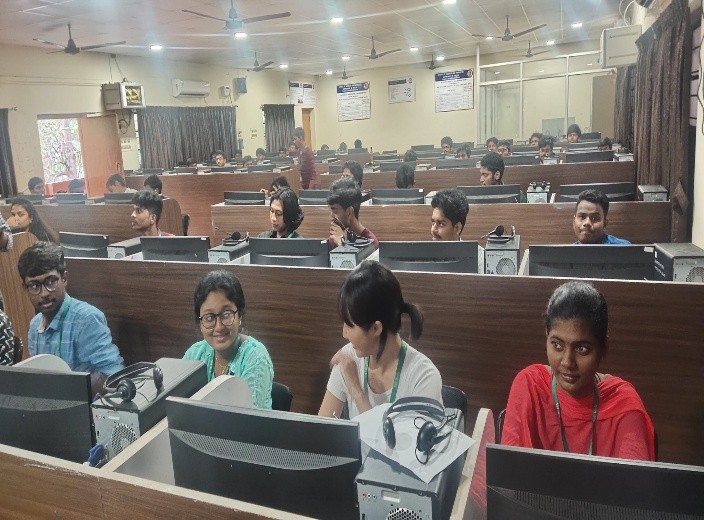
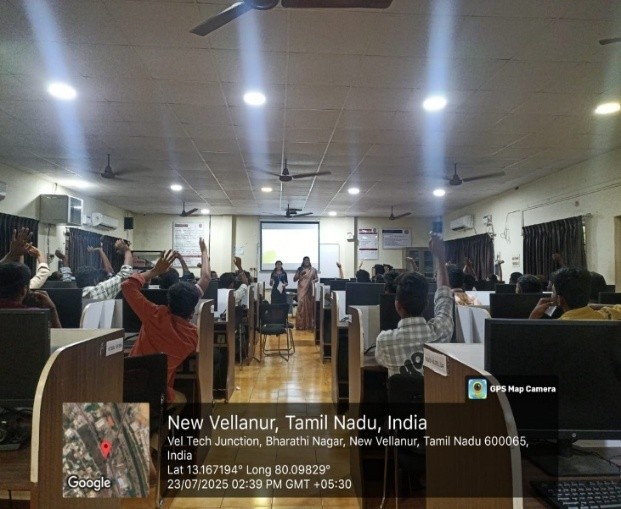
The Language Laboratory is a dedicated facility designed to enhance students’ proficiency in English communication through technology-enabled learning. It provides an interactive environment where students can systematically develop their listening, speaking, pronunciation, and presentation skills, which are essential for academic and professional success. The laboratory integrates multimedia resources and language learning software to facilitate experiential and learner-centered language training.
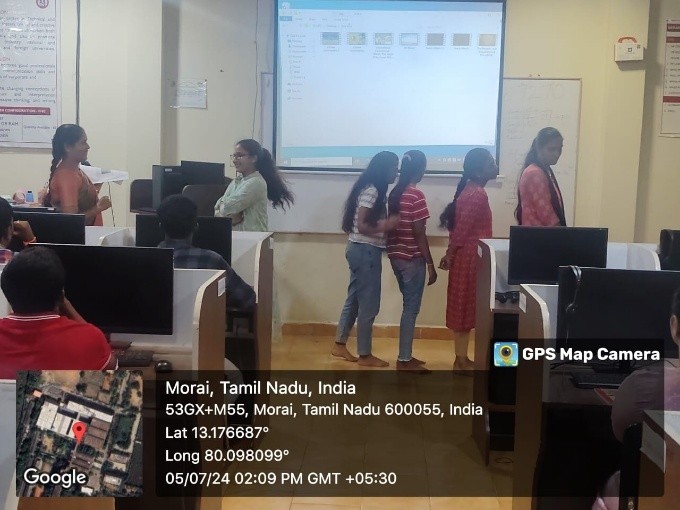
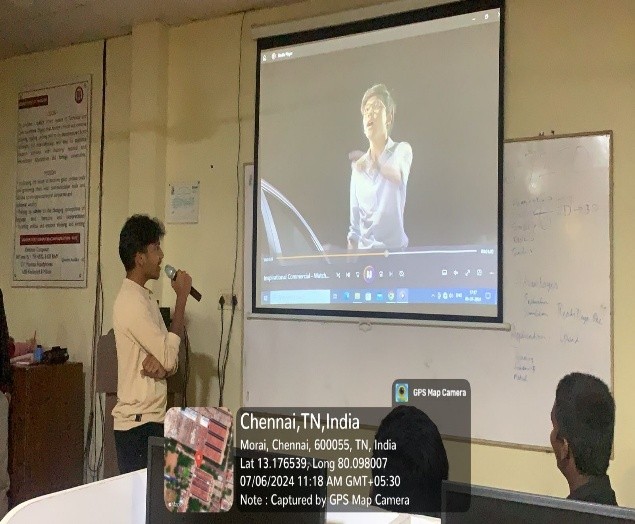
The lab sessions focus on developing both receptive and productive language skills. Students are trained through structured activities such as listening to speeches, TED Talks, conversations, interviews, and academic discussions, which help them improve comprehension and critical listening abilities. Speaking skills are developed through self-introductions, role-plays, group discussions, debates, mock interviews, extempore speeches, and technical presentations, enabling students to communicate confidently in professional and academic contexts.
The laboratory utilizes digital platforms such as YouTube and specialized language learning software including Globarena and Orell Talk, which provide authentic audio-visual materials, pronunciation practice, and interactive exercises. These tools support individualized learning and allow students to practice language skills at their own pace while receiving immediate feedback.
Overall, the Language Laboratory functions as an essential academic resource that supports the department’s objective of developing effective communication skills, improving language competence, and preparing students for global professional environments.
Location and System Configuration in English Lab
The English Language Laboratory is located in the 9th Block, with dedicated facilities in Room Nos. 9101, 9102, and 9103. The laboratory is equipped with modern HP desktop computer systems to support technology-assisted language learning. The systems feature storage capacities ranging from 932 GB to 1.14 TB, 128 MB graphics cards, and 64-bit architecture. The lab computers are powered by Intel® Core™ i5–8500 and 12th Gen Intel® Core™ i7–12700 processors, with 8 GB to 16 GB RAM, ensuring efficient performance for multimedia-based language training. These advanced configurations enable the effective use of digital resources, language learning software, and online platforms, thereby facilitating interactive sessions that enhance students’ listening, speaking, and communication skills.
9101, 9102 and 9103 Language Lab
Knowledge Nexus Forum
Knowledge Nexus: A Forum for Scholarly Dialogue and Intellectual Growth
Knowledge Nexus is an academic forum initiated by Dr. P. Revathi, Head of the Department, to provide Ph.D. scholars with a dynamic platform for interdisciplinary dialogue and intellectual exchange. Since its inauguration on 4 October 2024, the forum has served as a space where scholars present ideas, engage in constructive debates, and broaden their research perspectives beyond their specific areas of study. Guided by the principle “Debate the idea, not the person,” the forum promotes rigorous academic discussion while maintaining mutual respect and collegiality among scholars.
Through regular meetings, Knowledge Nexus has explored diverse themes such as Disability Studies, Artificial Intelligence and Humanity, Psychological Perspectives on Crime, Modern Cinema, Transhumanism, Dalit Consciousness, Ecocriticism, Dark Tourism, Film Studies, Webtoons, Diaspora Studies, and Travel Literature. The forum also emphasizes research development through sessions on navigating databases like Scopus, Web of Science, and UGC CARE, identifying credible journals, Harvard referencing, plagiarism awareness, qualitative and mixed-method research approaches, and thesis formatting.
Film-based discussions, literary debates, and interactive activities further enrich scholarly engagement. Resource persons from within and outside the institution contribute expert insights, enhancing the academic exposure of the scholars. Looking ahead to the upcoming academic year, structured initiatives such as Lit Quest, Creative Challenge, Learn From the Best, and Talk of the Town aim to strengthen collaborative learning and scholarly participation. Through this initiative, Knowledge Nexus continues to foster an environment that supports academic growth, critical inquiry, and research excellence.
Glimpses of the Forum
Google Link
2024: View Folder
2025: View Folder
2026: View Folder
Minutes of the Forum
Faculty
|
S.NO |
Faculty_ID |
NAME |
DESIGNATION |
QUALIFICATION |
| 1 | TTS 2167 | Dr. P. REVATHI | ASSOCIATE PROFESSOR & HoD | B.A., M.A., M.Phil., Ph.D. |
| 2 | TTS 2891 | Dr. PRAKASH. A | PROFESSOR | M.A., M.Phil., Ph.D. |
| 3 | TTS 3352 | Dr. M. VINOTHKUMAR | ASSOCIATE PROFESSOR | B.A., M.A., M.Phil., PGDTE, Ph.D. |
| 4 | TTS 3469 | Dr. YAMINI. G | ASSOCIATE PROFESSOR | B.A., M.A., M.Phil., Ph.D. |
| 5 | TTS 3527 | Dr. RAJESWARI. A | ASSOCIATE PROFESSOR | B.A., M.A., M.Phil., Ph.D. |
| 6 | TTS 2602 | Dr. CHRISPIN ANTONIETA DHIVYA. A | ASSISTANT PROFESSOR | B.A., M.A., M.Phil., Ph.D. |
| 7 | TTS 2893 | Dr. PRIYADARSHINI. M. C | ASSISTANT PROFESSOR | B.A., M.A., M.Phil., Ph.D. |
| 8 | TTS 3240 | Dr. S. MURUGAVEL | ASSISTANT PROFESSOR | B.A., M.A., M.Phil., Ph.D. |
| 9 | TTS 3341 | Dr. MANIKANDAN. A | ASSISTANT PROFESSOR | M.A., M.Phil., Ph.D. |
| 10 | TTS 3506 | Dr. BAIRAVI. B | ASSISTANT PROFESSOR | B.A., M.A., Ph.D. |
| 11 | TTS 3566 | Dr. SUBHA BALAMURUGAN | ASSISTANT PROFESSOR | B.A., M.A., M.Phil., Ph.D. |
| 12 | TTS 3585 | Dr. JESINTHA PRINCY. J | ASSISTANT PROFESSOR | B.A., M.A., Ph.D. |
| 13 | TTS 3615 | Dr. THARINI.C | ASSISTANT PROFESSOR | M.A.,M.PHI., PGDJMC.,NET(UGC).,PGDELT,PGDCA., Ph.D., |
| 14 | TTS 3652 | Dr. YASU BHARATHI.V. R | ASSISTANT PROFESSOR | B.A., M.A., Ph.D. |
| 15 | TTS 3840 | Dr. VALLIKKANNU.M | ASSISTANT PROFESSOR | B.A., M.A., M.Phil., Ph.D., |
| 16 | TTS 3984 | Dr. SATHISH KUMAR. J | ASSISTANT PROFESSOR | B.A., M.A., M.Phil., Ph.D. |
| 17 | TTS 4016 | Dr. ELANGOVAN.A | ASSISTANT PROFESSOR | B.A., M.A., Ph.D. |
| 18 | TTS 4021 | Dr. PRIYADARSHINI. S | ASSISTANT PROFESSOR | B.A., M.A., Ph.D., NET(UGC)., GATE (English) |
| 19 | TTS 4088 | Dr. ARTHI.R | ASSISTANT PROFESSOR | B.A., M.A., M.Phil., Ph.D. |
Academic And Association Activities
Vel Tech Centre for English Proficiency (IA 072) is one among those authorized to administer Cambridge English qualifications across India and South Asia. The Centre played a key role within India to offer comprehensive preparation and teaching English to students and teachers. As an outcome, on behalf of India, we have performed excellently in the year 2019. Hence, Vel Tech Centre for English Proficiency bagged the awards as recognition and achievements of the year.
The Department of English adopts Active Learning Methodology (ALM) as an integral part of its pedagogical practice to create a dynamic, learner-centered academic environment. ALM focuses on engaging students actively in the learning process through collaborative, experiential, and reflective activities rather than passive listening. This approach encourages students to participate in discussions, problem-solving tasks, and interactive exercises that promote deeper understanding and effective language acquisition.
In classroom practice, the faculty employ a variety of structured ALM strategies such as Jigsaw, Pair and Share, Three-Step Interviews, Rotating Chair Group Discussions, Mock Interviews, Picture Prompts, Tell and Retell, and Online Discussion Boards to enhance students’ communication and analytical skills. Interactive learning activities including Bingo, Word Race, Dumb Charades, Battleship, Quiz-Catechize, Crossword Puzzles, and Sorting Strips are also integrated to make language learning engaging and participatory. Techniques such as the Flipped Classroom and Muddiest Point further encourage students to reflect on concepts, clarify doubts, and take responsibility for their own learning.
Through these innovative pedagogical practices, ALM fosters active participation, collaborative learning, critical thinking, and effective communication skills among students. The outcome of this approach is the development of confident learners who are capable of expressing ideas clearly, engaging in meaningful academic discussions, and applying language skills effectively in both academic and professional contexts.
The Teachers Developers Initiative (TDI) of the department is led by a dedicated team of faculty members, including a nominated TDI Coordinator and supporting members, who work towards enhancing the quality of teaching and learning. The initiative primarily focuses on promoting innovative pedagogical practices, particularly the adoption of Active Learning Methods, to create a more engaging and interactive classroom environment. Faculty members are encouraged to experiment with and implement diverse teaching strategies that improve student participation, critical thinking, and overall learning outcomes.
As part of this initiative, the TDI Coordinator actively participates in a weekly forum organized at the DA’s office every Friday, where TDI representatives from various departments come together to share their classroom experiences and discuss the teaching methods they have implemented in their respective courses. This platform facilitates the exchange of best practices, collaborative learning among faculty, and continuous improvement in instructional approaches across departments.
The Freshman Engineering (FME) organizes the Talent Search Forum (TSF) every year in connection with the celebration of Engineers’ Day on 28 February. As part of this programme, the Department of English conducts a variety of competitions under the Literary and Life Skills Wing to encourage students to enhance their literary abilities and interpersonal skills. The forum provides a vibrant platform for students to engage in intellectually stimulating activities that extend learning beyond the classroom.
As part of this initiative, the Literary and Life Skills Wing conducts various events throughout the academic year, including Essay Writing, Spell Bee, Meme Master, Ship wreck, Story Writing, “Who Am I,” Test Your Vocabulary, and Connextions. These events are designed to foster creativity, improve language proficiency, and build confidence among students.
Information about the events, including guidelines, schedules, registration details, and contact information, is shared with students through an official brochure. Students can register for the events of their choice using the provided registration links and receive further updates through dedicated communication channels. Through this forum, the Department of English continues to provide meaningful opportunities for students to develop their literary interests and life skills in a collaborative and engaging environment.
The English Literary Association (ELA) was established by the Department of English with the objective of nurturing, showcasing, and encouraging the literary talents of freshman engineering students. The association consists of four clubs—Literary Club, Comic Club, Book Review Club, and Movie Club—each providing a platform for students to demonstrate their creativity, artistic expression, and critical analytical skills.
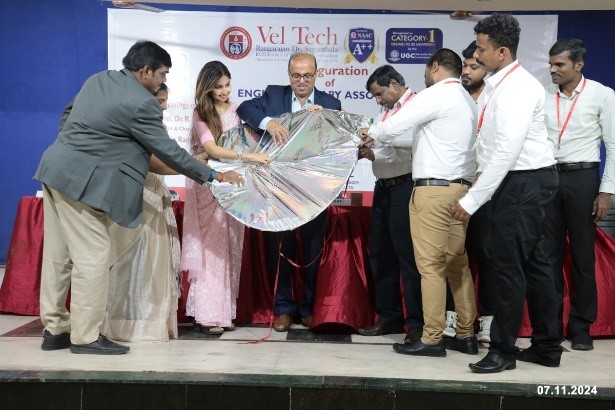
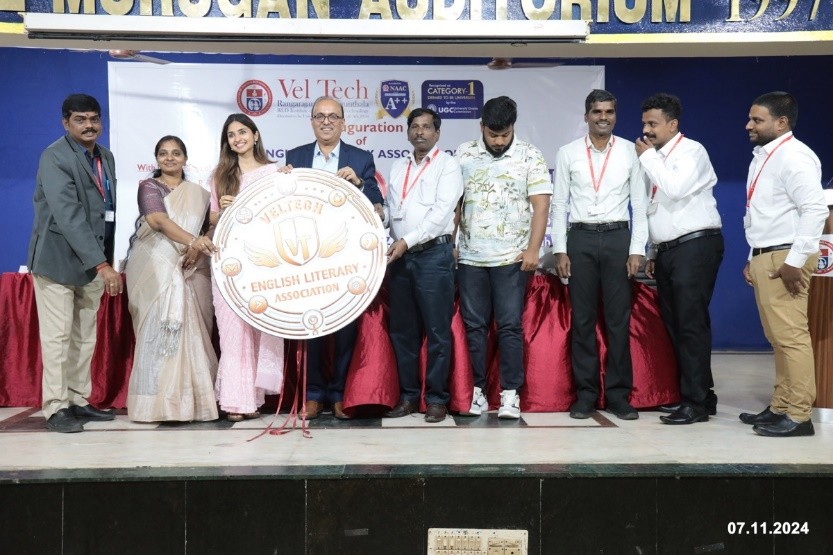
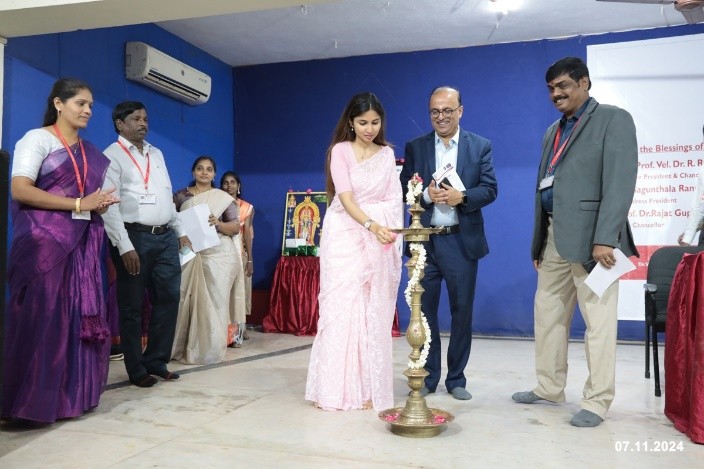
The ELA was formally inaugurated on 7 November 2024 by Ms. Jeba Niyaz (Learning and Development Manager. Merit Data & Technology India). The inauguration featured the unveiling of the association’s logo, symbolizing its vision and mission, along with the introduction of the four constituent clubs. The event witnessed the presence of distinguished guests, faculty members, and students, and marked a significant step towards promoting active engagement with English literature and fostering participation in literary and cultural activities among students.
As part of its annual activities, the association organizes various competitions through its clubs to encourage students to actively participate and showcase their talents in different literary and creative domains. These competitions culminate in a Valedictory Ceremony, during which the winners are recognized and awarded for their achievements. The event also acknowledges the enthusiastic participation of students, thereby motivating both winners and participants to continue developing their creative and analytical abilities.
Comic Club:
Comic books are embraced as a storehouse of art and Literature. Comic club aims to bring out the creativity of students and project them in graphical or artistic representation. A picture speaks thousand words. It is vital to comprehend the world not in a regular manner but with art and comic sense. This creative platform that enables them to visualize complexity of life in comic and sensible manner. In this Comic club the club members will develop interesting comic strips and stories that would both educate and entertain the readers. The talent and creativity of the students will be displayed which would serve as a resource of entertainment and Comic art.
Literary Club:
Literary Club is a vibrant community of individuals who share a passion for reading, writing, and exploring the literary arts. The club serves as a platform for students to delve into various genres of literature, discuss ideas, and engage in creative activities such as storytelling, poetry readings, and writing exercises. By bringing together people with diverse perspectives and literary interests, the club encourages intellectual curiosity, fosters an appreciation for language, and builds an environment where members can grow as readers, writers, and thinkers.
Book Review Club:
Book Review club inculcates the habit of reading among students. The club also provides a platform to review, discuss and propagate their love, admiration and numerous perspectives of a book. The club encourages students to develop critical thinking that improves not only their taste and sense in book reading but also their personality and perspective on life.
Movie Club:
The Movie Club is a gathering of cinema enthusiasts who come together to explore, discuss, and appreciate films from a variety of genres, styles, and cultures. It provides a welcoming space where students can watch and critique films with others who share a passion for storytelling through cinema. From classic masterpieces and foreign films to independent projects and blockbusters, the club broadens students’ perspectives on film as an art form and cultural commentary. Through discussions, members engage in meaningful analysis, share unique viewpoints, and develop a deeper appreciation for the intricacies of filmmaking.
Contact
Dr. P. Revathi
Head and Associate Professor
Department of English
Vel Tech Rangarajan Dr. Sagunthala R&D Institute of Science and Technology
Avadi, Chennai-600 062.
Email: [email protected]
Mobile: 9962780901